
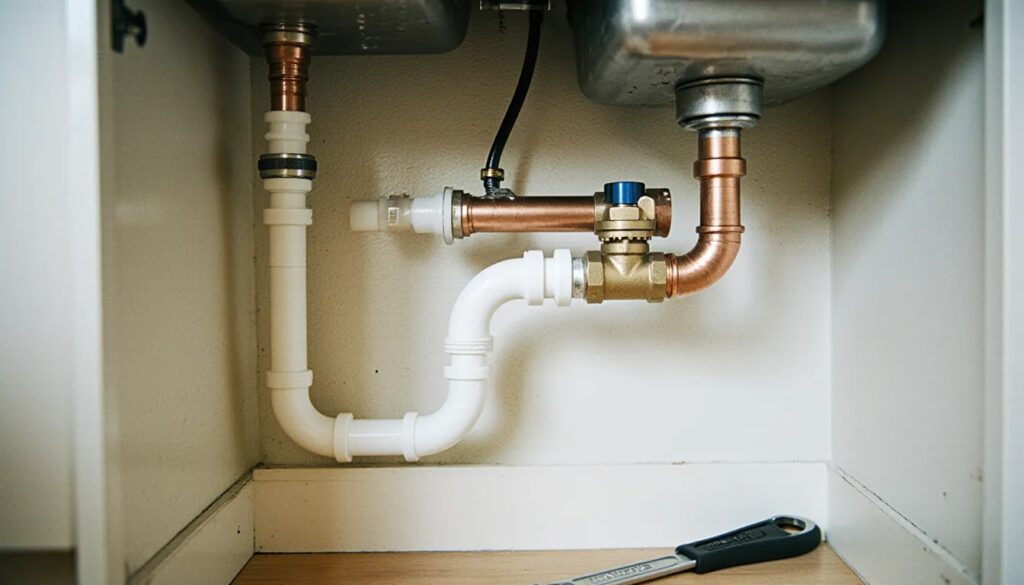
Plumbing is easy to ignore right up until it fails — and then it has your full attention. This guide is the homeowner’s map to the whole system: how it works, what goes wrong, what repairs cost, when to call a pro, and how to keep small problems from becoming flooded floors. Use it as a starting point, and follow the links into the detailed guides on each topic.
Quick Answer
Most home plumbing problems fall into a few categories: leaks, clogs and drain backups, water-heater failures, sewer-line issues, and weather-related bursts. The homeowner’s job is to catch them early, know where the main shutoff valve is, handle the small stuff safely, and call a licensed plumber for anything involving the main line, gas, or hidden damage. Fixing problems early is almost always cheaper than fixing emergencies.
What this guide covers
- How your home plumbing system works
- Leaks and how to detect them
- Water heaters: repair vs. replace
- Sewer lines and drain backups
- Plumbing emergencies
- Insurance and plumbing damage
- What plumbing costs in 2026
- Weather-related plumbing damage
- Plumbing risks by region
- When to DIY vs. call a pro
- How to choose a plumber
How your home plumbing system works
Your plumbing is really two systems. The supply side brings pressurized fresh water in from the street or a well and distributes it, hot and cold, to every fixture. The drain-waste-vent (DWV) side uses gravity to carry used water and waste out to the sewer or septic, with vent pipes that let air in so drains flow smoothly. Between them sit fixtures, valves, and your water heater. Two things are worth finding today: your main shutoff valve (which stops all incoming water) and your water heater’s shutoff. In an emergency, knowing these locations saves the floor.
Leaks and how to detect them
Leaks range from an obvious burst to a hidden drip inside a wall that shows up months later as a stain or a musty smell. Warning signs include an unexplained jump in the water bill, the sound of running water when everything is off, warm spots on the floor (a possible slab leak), warping, and mildew. A simple test: read your water meter, avoid using water for a couple of hours, and read it again — movement means a leak somewhere. Because insurers often deny gradual leaks, early detection protects both your home and your coverage. Full detail: signs of a hidden water leak.
Water heaters: repair vs. replace
A tank water heater lasts roughly 8 to 12 years; tankless units often 20 or more. Repair a younger unit with a failed part (thermostat, element, valve); replace one that is past a decade, has a leaking tank, or would cost more than about half the price of new to fix. A leaking tank body is never repairable. When replacing, decide between a cheaper like-for-like tank and a pricier tankless unit that lasts longer and never runs out mid-shower. Full detail: water heater repair vs. replacement.
Sewer lines and drain backups
When several drains slow down at once, toilets gurgle, or the lowest fixtures back up, the problem is usually the main sewer line rather than a single clog. Common causes are tree-root intrusion, aging or collapsed pipe, bellied sections, and grease or wipes. A sewer camera inspection is the smart first step — it shows exactly what is wrong before anyone digs, and trenchless repair can sometimes renew a line without tearing up the yard. Standard homeowners policies exclude sewer backups unless you add an endorsement. Full detail: sewer line problems and early warning signs.
Plumbing emergencies
In any plumbing emergency, the first move is the same: shut off the water — at the fixture if you can, at the main valve if you cannot — then deal with electrical hazards and document the damage. A burst pipe is the classic case, where the first ten minutes decide how much you lose. Overflowing toilets, failed water heaters, and sudden no-water situations each have their own quick response. Full detail: common plumbing emergencies and what to do and the burst pipe emergency guide.
Insurance and plumbing damage
Insurers separate sudden damage (usually covered) from gradual damage (usually not). A burst pipe that floods a room is covered for cleanup and repairs, though not the pipe itself; a slow leak you should have caught, sewer backups without an endorsement, and outside flooding are generally excluded. Act fast, document before cleanup, and consider sewer-backup and service-line endorsements. Full detail: homeowners insurance and plumbing leaks and does homeowners insurance cover water damage.
What plumbing costs in 2026
Plumbers typically charge an hourly rate plus a service-call fee, and prices swing widely with the job’s complexity and your region. Small accessible repairs run modest; in-wall, under-slab, or main-line work runs into the thousands. The best protection against overpaying is to get itemized quotes and compare them on identical scope. Full detail: how much plumbing repair costs in 2026 and comparing contractor estimates.
Weather-related plumbing damage
Extreme weather is when plumbing gets tested. Hard freezes burst pipes (even in normally mild regions); heat and drought shift soil and cause slab leaks; hurricanes and heavy rain drive sewage backflow. Match prevention to your climate: insulate and drip in the cold, watch the water bill in drought, and guard against backflow before storms. Full detail: plumbing during extreme weather.
Plumbing risks by region
Where you live shapes your plumbing risks. In Florida, salt-air corrosion, slab leaks, and hurricane backflow dominate. In Texas, the legacy of severe freezes and slab-on-grade construction means burst pipes and slab leaks. In California, seismic movement and drought stress buried lines. In New York and the Northeast, aging building plumbing and combined sewers bring winter freezes and heavy-rain backups. In New Jersey, basement flooding and sewer-line root intrusion are common. Knowing your regional pattern tells you where to focus prevention.
When to DIY vs. call a pro
Homeowners can reasonably handle small jobs: a plunger on a simple clog, a new toilet flapper, a faucet aerator, a supply-line swap with the water off. Call a licensed plumber for anything involving the main sewer line, gas lines, water heaters beyond a thermostat reset, in-wall or under-slab work, or any situation where you are unsure — the cost of a mistake behind a wall dwarfs the cost of the call.
How to choose a plumber
Verify licensing and insurance yourself — do not assume. Get more than one written, itemized estimate, ask the plumber to explain what failed and why the fix is right, and be wary of pressure to approve major work on the spot. Reviews help you gauge reliability, but confirm credentials directly with your state or local licensing board. See how to verify a contractor is licensed and insured and contractor scam red flags before you hire.
Frequently asked questions
What are the most common plumbing problems?
The most common are leaks (visible and hidden), clogs and drain backups, running or failing toilets, water-heater problems, low water pressure, and sewer-line issues. Most are cheaper to fix when caught early, before they cause water damage.
Where is my main water shutoff valve?
In colder climates it is usually inside, in a basement or utility area on a wall facing the street. In warmer, slab-built regions it is often outside near an exterior wall or at the meter box by the curb. Locate and test it before you ever need it in an emergency.
When should I call a plumber instead of DIY?
Call a licensed plumber for anything involving the main sewer line, gas lines, water heaters beyond simple resets, in-wall or under-slab work, or any problem you are unsure about. Small clogs, flappers, aerators, and supply-line swaps are reasonable DIY jobs.
How can I prevent plumbing problems?
Fix small leaks promptly, never pour grease down drains, flush only toilet paper, insulate pipes before freezes, watch your water bill for spikes, and know where your main shutoff is. Periodic inspections help in older homes and tree-lined lots.
Does insurance cover plumbing damage?
It typically covers sudden, accidental water damage such as a burst pipe, but not the worn pipe itself, gradual leaks, or sewer backups without an endorsement. Acting quickly and documenting the damage protects your claim.
The bottom line
You do not need to be a plumber to protect your home — you need to know how the system works, catch problems early, and call a pro for the jobs that matter. Find your main shutoff today, keep an eye on leaks and drains, and match your seasonal prevention to your climate. When you do need help, hire carefully and verify credentials yourself.
Ready to find help? Browse plumbers on Powered By The People and compare them using real, aggregated reviews. Explore the detailed guides linked throughout, and find more in the plumbing section.