
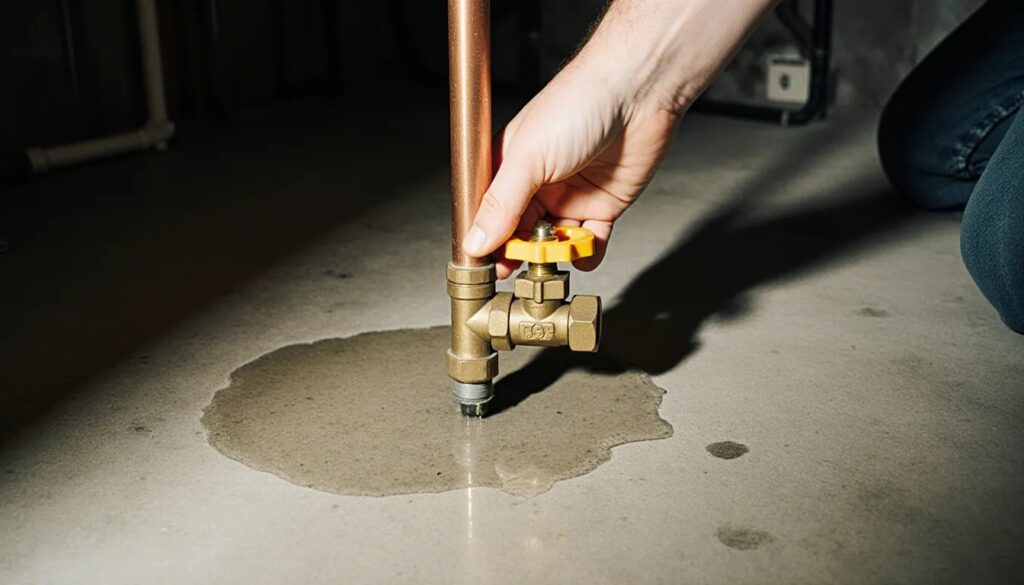
A burst pipe is one of the few home emergencies where the first ten minutes genuinely change how much you lose. Water can pour in at dozens of gallons an hour, and it does not wait for a plumber. Knowing exactly what to do — in order — is the difference between a mopped-up scare and a ruined floor.
Keep this guide somewhere you can find it fast. The steps below are the ones that limit the damage before help arrives.
Quick Answer
If a pipe bursts, shut off your home’s main water valve immediately, then turn on the lowest faucets to drain the remaining water and relieve pressure. Cut the electricity to any area near standing water, move belongings clear, and call a licensed plumber. Document everything with photos before cleanup for your insurance claim.
What to do in the first 10 minutes
- Shut off the main water supply. Find your main shutoff valve — usually where the water line enters the home, near the meter, in a basement, crawlspace, or an outside box — and turn it fully clockwise. This is the single most important step.
- Open faucets to drain the system. Turn on the lowest cold taps in the house and flush toilets to pull the remaining water out of the pipes and stop it flowing to the break.
- Kill the power if water is near outlets or fixtures. If it is safe to reach your breaker panel without standing in water, shut off circuits serving the flooded area. If you cannot reach it safely, stay out and call an electrician or the utility.
- Contain and move. Get valuables, electronics, and furniture off the wet floor. Put down towels or a bucket under an active drip.
- Photograph the damage. Before you clean up, take clear photos and video of the break and everything affected. Your insurer will want them.
- Call a licensed plumber. A burst pipe needs a real repair, not tape. If ceilings are sagging or water is widespread, treat it as urgent.
Where is my main shutoff valve?
Find it now, not during the emergency. In colder climates the main valve is often in the basement or a utility area on an interior wall facing the street. In warmer, slab-built regions it is frequently outside near an exterior wall or at the meter box by the curb. There are usually two valves at the meter — the street-side one belongs to the utility; use the house-side valve. If yours is a wheel-style gate valve, test that it still turns; old ones seize. Knowing this location is the cheapest insurance you will ever buy.
Why pipes burst
Understanding the cause helps you prevent the next one:
- Freezing. Water expands as it freezes and the pressure ruptures the pipe — the classic cold-snap failure, and not only in northern states.
- Corrosion and age. Old galvanized steel and aging copper thin out and eventually give way.
- Excessive water pressure. Pressure above roughly 80 psi stresses pipes and fittings; a pressure-reducing valve helps.
- Failed joints and past DIY repairs. Weak solder joints and over-tightened fittings crack under normal use.
A real-world moment
A pipe lets go behind a second-floor bathroom wall at 2 a.m. By the time the homeowner wakes to a stain spreading across the living-room ceiling, water has been running for an hour. The ones who come out of this well are not the ones with the fanciest tools — they are the ones who already knew where the main valve was and shut it in under a minute. Everyone else spends that minute searching, and the water keeps coming.
After the water stops: limiting further damage
Once the flow is off, moisture is the next enemy. Mold can begin within about 24 to 48 hours. Start air moving with fans, pull up soaked rugs, and if the volume was significant, call a water-damage restoration professional to dry the structure properly — wet drywall and subfloor hold water you cannot see. Our guide on what homeowners insurance covers explains which of these costs a policy typically picks up.
Mistakes to avoid
- Wasting minutes looking for the shutoff valve — locate it today, while it is calm.
- Touching electrical panels or outlets while standing in water.
- Cleaning up before photographing the damage, which weakens your insurance claim.
- Patching a burst pipe with tape and calling it done — it will fail again.
- Underestimating hidden moisture in walls and floors, which leads to mold later.
Frequently asked questions
What is the first thing to do when a pipe bursts?
Shut off your home’s main water valve immediately. Stopping the flow at the source limits the damage more than anything else. Then open low faucets to drain the lines and relieve pressure before calling a plumber.
Should I turn off electricity if a pipe bursts?
Yes, if water is near outlets, appliances, or fixtures and you can reach your breaker panel without standing in water. Water and electricity are a serious shock hazard. If you cannot safely reach the panel, stay clear and call an electrician or your utility.
Does homeowners insurance cover a burst pipe?
Most policies cover sudden, accidental water damage from a burst pipe, including the cleanup and repairs to your home, though not the worn-out pipe itself. Damage from long-term neglect or a home left unheated may be denied. Document everything and review your policy.
How do I stop a burst pipe from bursting in winter?
Keep the home heated, insulate pipes in unheated spaces like garages and crawlspaces, let a faucet drip during hard freezes, and disconnect outdoor hoses. See our guide on plumbing during extreme weather for a full cold-snap checklist.
How fast does mold grow after a pipe bursts?
Mold can begin developing within about 24 to 48 hours on damp materials. That is why drying the area quickly with fans and, for larger leaks, professional water extraction matters as much as the plumbing repair itself.
The bottom line
A burst pipe rewards preparation. Learn where your main shutoff is, keep this sequence handy, and act on the water before you worry about anything else. Shut it off, drain the lines, protect against electrical hazards, document, and call a pro. Do those five things and a frightening night usually stays a manageable one.
Need a plumber fast? Browse plumbers on Powered By The People and compare them with real, aggregated reviews. Related reading: common plumbing emergencies and what to do, signs of a hidden water leak, and filing a water damage insurance claim. More help in the plumbing section.