
The most expensive plumbing leaks are the ones you can’t see. They drip behind walls, under slabs, and inside ceilings for weeks or months, ruining drywall, framing, flooring, and insulation before a single drop ever shows up. By the time it does, the bill often includes mold, structural repairs, and an insurance fight over whether the leak counts as “sudden” or “gradual.”
Here are the warning signs that a hidden leak is at work in your home, the quick at-home checks that confirm it, and what to do next.
Quick Answer
The clearest signs of a hidden water leak are an unexplained spike in your water bill, the water meter ticking when nothing is running, a musty smell, brown stains on walls or ceilings, warm spots on the floor (possible slab leak), low water pressure, the sound of running water with everything off, and any visible mold. If you see any of these, do a meter test, then call a licensed plumber. Catching it early is often the difference between a $300 fix and a $10,000+ repair.
Why hidden leaks are so costly
A small drip behind a wall can lose dozens of gallons a day, silently soaking framing and drywall. Wet wood invites termites and carpenter ants. Constant moisture grows mold within 24 to 48 hours. By the time stains appear, the repair often includes plumbing, demolition, mold remediation, and rebuild. Insurance may help when the cause is sudden and accidental, but many policies deny “gradual” leaks, which is exactly what hidden ones tend to be by the time they’re found.
The signs to look for
1. An unexplained spike in your water bill
If your bill jumps without a change in usage, treat it as a leak alert until proven otherwise. A 20 to 50 percent month-over-month increase you can’t explain is one of the most reliable early signals.
2. The water meter is moving when nothing is running
Find your meter, shut off every fixture and appliance in the house, and watch the meter for 10 minutes. If it’s still moving, water is going somewhere it shouldn’t. This is the fastest at-home leak test, and it works in nearly every home.
3. A persistent musty smell
A damp, earthy odor that doesn’t go away points to moisture trapped behind a wall, under flooring, or in a basement or crawl space. Trust your nose; mold and wet wood have a distinctive smell.
4. Stains, blisters, or warped surfaces
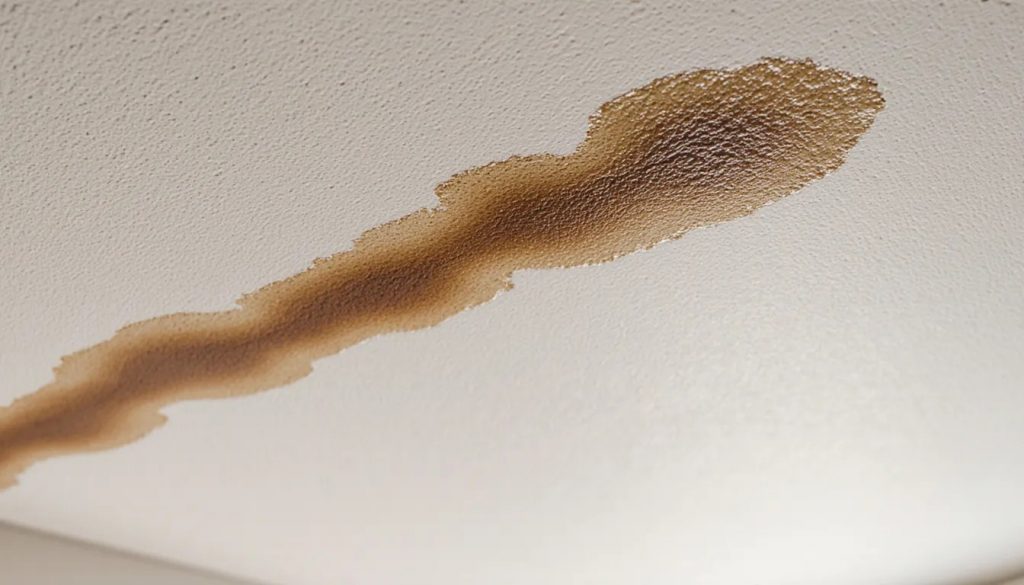
Brown ceiling rings, bubbling paint, peeling wallpaper, soft spots in drywall, and warped or cupped flooring are all signs water is reaching places it shouldn’t. Even small stains can indicate larger damage hidden behind the finish.
5. Warm spots on the floor (possible slab leak)
In homes on a concrete slab, an unexplained warm patch on the floor can be a hot-water line leaking under the slab. A higher gas or electric bill alongside it (from the water heater working overtime) is a common companion clue.
6. Low water pressure
If pressure has dropped throughout the house and there’s no obvious cause, a hidden leak somewhere in the supply system is one possibility (along with a partly closed valve or municipal supply issue).
7. The sound of running water with everything off
A faint hiss or trickle in the walls, especially noticeable late at night, can mean a supply-line leak under pressure. Quiet rooms are good leak detectors.
8. Visible mold or mildew
Mold growth in surprising spots, under sinks, along baseboards, on the underside of countertops, often points to a slow leak feeding moisture into the area.
How to do the meter test
Most water meters are at the curb (in a pit) or near where the main line enters the house. Turn off all interior water use, including ice makers, irrigation, and appliances. Note the meter reading or sweep-hand position. Wait 10 to 15 minutes without touching any fixture. If the meter has moved, there’s a leak somewhere on your side of the meter. If it hasn’t, the leak is either intermittent or upstream of the meter.
Regions where hidden leaks are especially common
Hidden leaks happen everywhere, but some regions see them more often. In Texas and California, slab-on-grade construction makes slab leaks a recurring problem; the warm-floor signal is often the first clue. In New York, New Jersey, and other Northeast markets, aging supply piping in older buildings drives chronic pinhole leaks behind plaster walls. In Florida and coastal areas, salt and humidity corrode fittings faster, and post-storm leaks can hide for months. In freeze-prone regions, a pipe that cracked in winter can drip for weeks before the homeowner notices in spring.
What insurance covers (and doesn’t)
Sudden, accidental water damage from a covered event (like a burst pipe) is generally covered; long-term, gradual leakage is not. Hidden leaks often live in that gray zone, and insurers may deny claims they believe were “preventable” because the homeowner should have noticed sooner. Documenting when you found the leak and what you did to mitigate is the homeowner’s best defense. Our guide on the water damage insurance claim process covers exactly what to document.
When to call a pro
The moment your meter test confirms a leak, or you find consistent stains, mold, or warm floor spots, call a licensed plumber with leak-detection equipment. They use acoustic listeners, thermal imaging, and pressure tests to find hidden leaks without ripping out walls. Pricing varies; expect to discuss leak detection and the repair separately. For context on what plumbing repairs typically run, see our plumbing repair cost guide, and if there’s an active leak, our plumbing emergencies guide covers the first ten minutes.
Mistakes to avoid
- Painting over stains instead of investigating the source.
- Assuming the bill spike is a billing error without running a meter test.
- Waiting to see if it gets worse. Hidden leaks rarely fix themselves.
- Ignoring musty smells because nothing is visibly wet.
- Doing major demolition before a pro pinpoints the leak.
Frequently asked questions
What are the signs of a hidden water leak?
The most common signs are an unexplained water bill spike, the water meter ticking when nothing is running, a musty smell, brown stains on walls or ceilings, warm spots on the floor (possible slab leak), low water pressure, the sound of running water with everything off, and visible mold.
How do I check for a hidden leak at home?
Shut off every fixture and appliance, then watch your water meter for 10 to 15 minutes. If it moves with everything off, water is escaping somewhere on your side of the meter. Combine that with a walk-through looking for stains, smells, and warm floor spots.
What is a slab leak?
A slab leak is a water-line leak inside or under the concrete slab a home sits on, common in slab-on-grade homes in Texas, California, and parts of the South. Warning signs include unexplained warm spots on the floor, a higher water heater bill, and mysterious moisture along baseboards.
Does insurance cover hidden water leaks?
It depends on the cause. Sudden, accidental damage from a burst is generally covered, but gradual leaks and damage attributed to deferred maintenance are typically excluded. Documenting when you found the leak and how quickly you mitigated the damage is the homeowner’s strongest position.
When should I call a plumber for a possible hidden leak?
As soon as a meter test confirms a leak, or you see persistent stains, mold, warm floor spots, or smell mustiness you cannot trace. Licensed plumbers use acoustic and thermal tools to locate hidden leaks before any wall demolition.
The bottom line
Hidden leaks reward attention. Watch the water bill, do a meter test when something seems off, trust musty smells, and check for warm floor spots in slab-on-grade homes. Catch one early and the repair is usually small; catch one late and you’re paying for plumbing, mold, drywall, and a possible insurance argument. The signs are quiet but consistent, which is exactly why knowing them is worth far more than they look.
Need a plumber for leak detection or repair? Browse local plumbing companies on Powered By The People using real, aggregated reviews, and confirm any plumber is licensed and insured before you sign.