
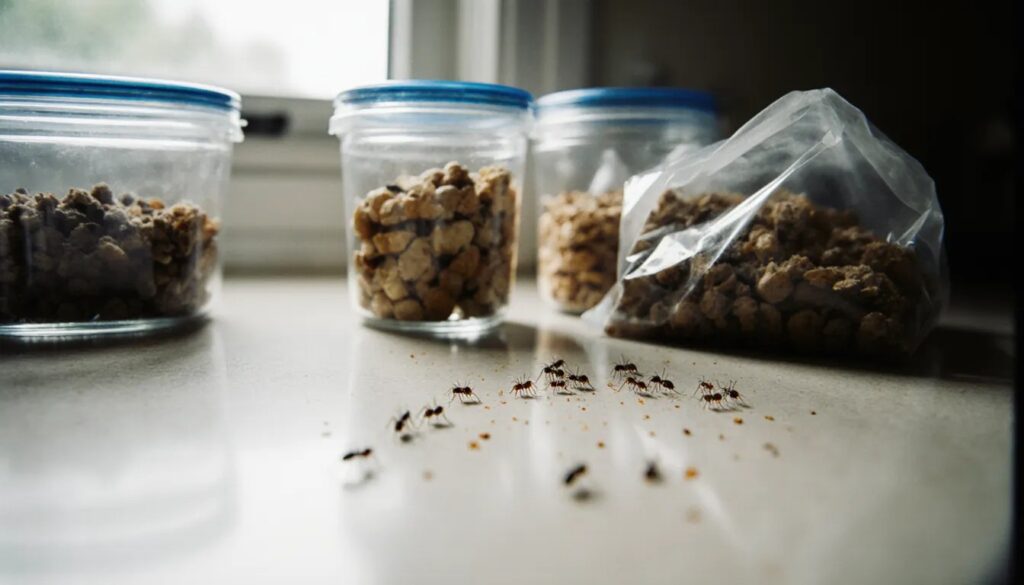
Pests are not random. Every ant trail, roach sighting, and mouse in the pantry is a response to something your home is offering — food, water, shelter, or an easy way in. The good news is that once you understand what draws them, prevention stops being a guessing game. You are simply closing the invitations.
Here are the four things nearly every household pest is looking for, and how to make your home a lot less appealing.
Quick Answer
Pests are attracted by four things: food (crumbs, open containers, pet food, garbage), water (leaks, standing water, humidity), shelter (clutter, gaps, warm voids), and easy access (cracks, gaps around pipes, torn screens). Remove those and most infestations never start. The highest-impact steps are fixing moisture problems, sealing entry points, and storing food and trash in sealed containers.
1. Food: the number-one draw
Almost every pest is hunting for calories, and homes are full of them. Crumbs under the toaster, an open cereal box, dirty dishes overnight, pet food left in a bowl, sticky spills, and unsecured garbage all read as a buffet to ants, cockroaches, and rodents. Even small residues matter — a colony of ants can thrive on what you would not notice. Reduce the draw by:
- Storing pantry staples in sealed, hard containers rather than original paper or cardboard packaging.
- Wiping counters and sweeping floors daily, especially in the kitchen.
- Not leaving pet food out overnight and cleaning up around the bowl.
- Taking out the trash regularly and using bins with tight lids, inside and out.
- Cleaning under and behind appliances, where grease and crumbs collect.
2. Water and moisture
Pests need water as much as food, and many are drawn to moisture above all else. Leaky pipes, dripping faucets, condensation, poor drainage, and humid basements or crawlspaces create the damp conditions cockroaches, silverfish, termites, and ants seek out. Standing water in saucers, gutters, and yard containers is a mosquito nursery. Fixing moisture is often the single most effective pest step a homeowner can take: repair leaks promptly, run dehumidifiers in damp spaces, keep gutters clear and draining away from the foundation, and empty standing water weekly. Our guide on signs of a hidden water leak can help you find the moisture you cannot see.
3. Shelter and clutter
Pests want somewhere safe to nest, and clutter provides it. Stacked cardboard, piles of paper, cluttered garages and basements, overgrown vegetation against the house, firewood stored by the foundation, and thick mulch all give insects and rodents cover and nesting material. Indoors, undisturbed corners and storage give roaches and mice room to breed unseen. Decluttering, storing items in sealed plastic bins instead of cardboard, keeping vegetation trimmed back from the walls, and moving woodpiles away from the house all remove the shelter pests rely on.
4. Easy access: the gaps that let them in
Even a spotless, dry home gets pests if the doors are effectively open. Pests exploit cracks in the foundation, gaps around pipe and utility penetrations, unsealed vents, torn window and door screens, and space under exterior doors. Rodents fit through openings far smaller than seems possible, and insects need only a hairline crack. Sealing the building envelope is preventive work that pays off across every pest at once:
- Caulk cracks and gaps in the foundation and around windows.
- Seal openings where pipes, wires, and cables enter the home.
- Add or repair door sweeps and weatherstripping.
- Screen vents and chimneys, and repair torn window screens.
- Fill larger rodent-sized gaps with steel wool or hardware cloth before sealing.
Seasonal and regional triggers
What is available changes through the year. Cold weather drives rodents and some insects indoors seeking warmth; spring and summer bring termite swarms and mosquito booms; fall pushes many pests inside as temperatures drop. Region matters too — humid states like Florida sustain pests year-round, while a storm or drought can suddenly displace pests toward your home. Matching your prevention to the season keeps you ahead of the pattern rather than reacting to it. See pest control for Florida homes for a year-round example.
A real-world moment
A homeowner keeps finding ants on the kitchen counter every summer and keeps wiping them away, frustrated. The trail leads back to a barely-dripping pipe under the sink and a cereal box with a torn liner. Fix the drip, move the cereal into a sealed jar, and caulk the gap where the ants were entering by the pipe — and the trail simply stops. Nothing about the ants changed; the invitations did.
Mistakes to avoid
- Treating visible pests with sprays while leaving the food, water, or entry point that drew them.
- Storing food and pet food in easily-chewed cardboard or bags.
- Ignoring small leaks and humidity, which quietly attract the most pests.
- Letting cardboard clutter and woodpiles sit against the house.
- Assuming a clean home is immune — access gaps let pests in regardless.
Frequently asked questions
What attracts pests to a house?
Pests are drawn by four things: food (crumbs, open containers, pet food, garbage), water (leaks, standing water, humidity), shelter (clutter, vegetation, gaps), and easy access through cracks and openings. Remove those and most infestations never get started.
Does a clean house keep pests away?
Cleanliness helps a lot by removing food and reducing shelter, but it is not enough on its own. Even a spotless home gets pests if there are moisture problems or open entry points. Effective prevention combines cleaning with fixing leaks and sealing gaps.
Why do I get pests even though my home is clean?
Usually because of moisture or access. A hidden leak, humid crawlspace, or standing water draws pests regardless of cleanliness, and gaps around pipes, vents, or doors let them in. Check for these two factors when a clean home still has pests.
What is the most effective way to prevent pests?
The highest-impact steps are fixing moisture problems, sealing entry points, and storing food and trash in sealed containers. Together these remove the water, access, and food that pests depend on, preventing far more infestations than spraying after the fact.
Do pests come inside more in certain seasons?
Yes. Cold weather drives rodents and some insects indoors for warmth, spring and summer bring termite swarms and mosquitoes, and fall pushes many pests inside as it cools. Matching prevention to the season helps you stay ahead of the pattern.
The bottom line
Pests follow opportunity. Take away food, water, shelter, and access and you remove the reasons they come in the first place — which prevents far more problems than any spray applied after they arrive. Focus on the big three: fix moisture, seal the gaps, and store food and trash tightly. Prevention is quietly the cheapest pest control there is.
Dealing with a persistent problem? Browse pest control companies on Powered By The People using real, aggregated reviews. Related reading: preventing pest problems, pest control costs in 2026, and rodents in the attic. More in the pest control section.