
Sewer line problems have a way of announcing themselves quietly — a slow drain here, a faint smell there — long before they turn into a backed-up basement. Catching those early signals is what separates a routine cleaning from a five-figure excavation.
Here is what to watch for, what usually causes it, and when a warning sign means it is time to call a plumber before things get worse.
Quick Answer
The earliest signs of a sewer line problem are several drains running slow at once, gurgling toilets, sewage odors indoors or in the yard, and water backing up in low fixtures like a basement drain or tub. If multiple fixtures are affected together, the issue is likely in the main sewer line, not a single clog — call a plumber for a camera inspection before it backs up.
Early warning signs to watch for
- Multiple slow drains at once. One slow sink is a local clog. Several slow drains across the house point to the shared main line.
- Gurgling sounds. A toilet that bubbles when you run the washing machine, or a drain that gurgles when you flush, signals trapped air from a blockage downstream.
- Sewage odor. A persistent rotten-egg or sewage smell indoors or over the yard means waste is not moving as it should.
- Backups in the lowest fixtures. Water or waste appearing in a basement floor drain, shower, or tub when you use another fixture is a classic main-line symptom.
- Unusually lush or soggy patches in the lawn. A leaking line fertilizes and waters the grass above it — a green stripe or a wet, sunken area can mark the path of a break.
- Frequent clogs that come right back. If you are plunging or snaking the same drain repeatedly, something bigger is going on.
What causes sewer line problems
Most main-line trouble comes down to a handful of causes:
- Tree root intrusion. Roots seek moisture and work into pipe joints, then grow until they choke the line. This is the most common cause in older, tree-lined neighborhoods.
- Aging or collapsed pipe. Clay, cast iron, and old “Orangeburg” pipe crack, corrode, and eventually collapse with age.
- Bellied or sagging lines. A section that has sunk collects waste and causes repeat backups.
- Grease, wipes, and buildup. Cooking grease and “flushable” wipes (which do not break down) accumulate and block flow.
- Ground shifting. Soil movement, nearby construction, and freeze-thaw cycles stress and misalign pipe.
Repair vs. replacement — and the value of a camera
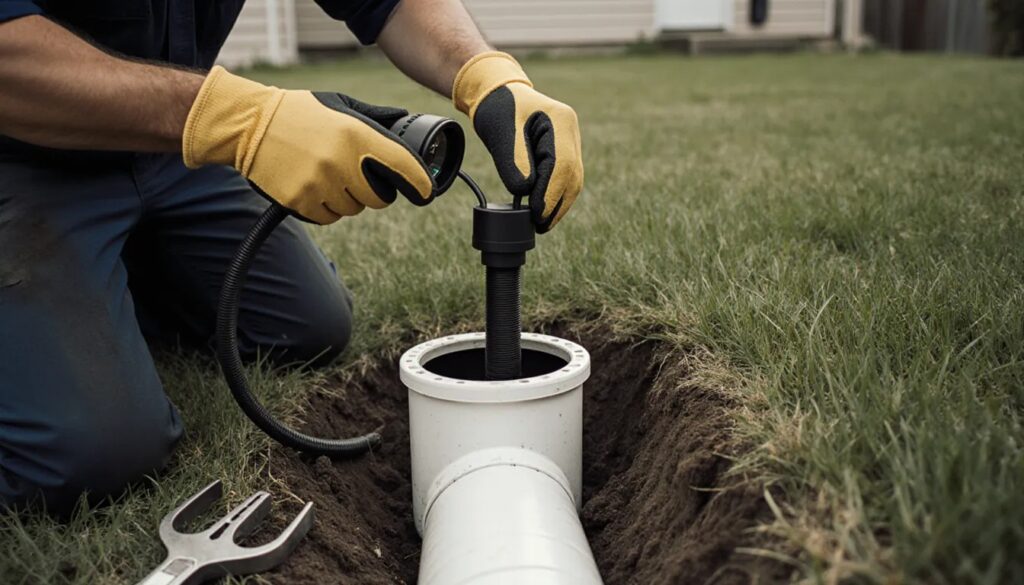
Before anyone digs, a sewer camera inspection is worth its modest cost. A plumber feeds a waterproof camera down the line and sees exactly what is wrong and where. That turns guesswork into a targeted plan — sometimes a simple cleaning or root-cutting, sometimes a spot repair, sometimes a full replacement. Trenchless methods (pipe lining or pipe bursting) can often renew a line without tearing up the whole yard, though not every situation qualifies. Insist on seeing the camera footage; it is your evidence that the recommended work is actually needed. Our guide on comparing contractor estimates helps when you are weighing bids for major work like this.
A real-world moment
A homeowner notices the basement floor drain burping up a little water every time the upstairs shower runs. Annoying, but easy to ignore — until a holiday weekend when the whole line backs up with a house full of guests. A camera inspection weeks earlier would have shown the root mass creeping through a joint and allowed a scheduled, cheaper root-cutting instead of an emergency call at premium rates. The early gurgle was the invitation; the backup was the bill.
What you can do to prevent it
- Never pour cooking grease down the drain; scrape plates into the trash.
- Flush only toilet paper — not wipes, paper towels, or hygiene products, even “flushable” ones.
- If you have large trees near the line, ask a plumber about periodic root treatment or inspection.
- Consider a camera inspection before buying an older home, and every few years if you have had prior issues.
- Ask your insurer about a sewer backup endorsement — standard policies usually exclude backups.
Frequently asked questions
What are the first signs of a sewer line problem?
The earliest signs are several drains running slow at the same time, toilets or drains gurgling, sewage odors indoors or in the yard, and water backing up in low fixtures like a basement drain or tub. When multiple fixtures are affected together, suspect the main line.
How do I know if it is a clog or my main sewer line?
If only one fixture drains slowly, it is usually a local clog. If several fixtures are slow or backing up at once — especially the lowest ones — the problem is likely the shared main sewer line, and you should have it camera-inspected.
How much does sewer line repair cost?
It ranges widely. A cleaning or root-cutting is relatively inexpensive, a spot repair is moderate, and a full line replacement can reach many thousands of dollars depending on length, depth, and access. A camera inspection first ensures you only pay for the work that is actually needed.
Does insurance cover sewer line backups?
Usually not under a standard homeowners policy — sewer and drain backups are typically excluded unless you have added a sewer backup endorsement. The line itself, being wear-and-tear, is generally your responsibility. Check your policy and consider adding the coverage.
Can tree roots really break a sewer pipe?
Yes. Tree roots are the most common cause of main-line failures in older neighborhoods. They enter through tiny gaps at pipe joints seeking moisture, then grow until they block or crack the pipe. Periodic inspection or root treatment helps in tree-lined areas.
The bottom line
Sewer problems are cheapest to fix when you catch them early. Treat repeated slow drains, gurgling, odors, and low-fixture backups as the main line asking for attention — and get a camera down there before you approve any digging. Seeing the actual problem protects you from paying for work you do not need.
Comparing local plumbers for a sewer inspection? Browse plumbers on Powered By The People using real, aggregated reviews. Related reading: common plumbing emergencies, signs of a hidden water leak, and plumbing repair costs in 2026. More in the plumbing section.