
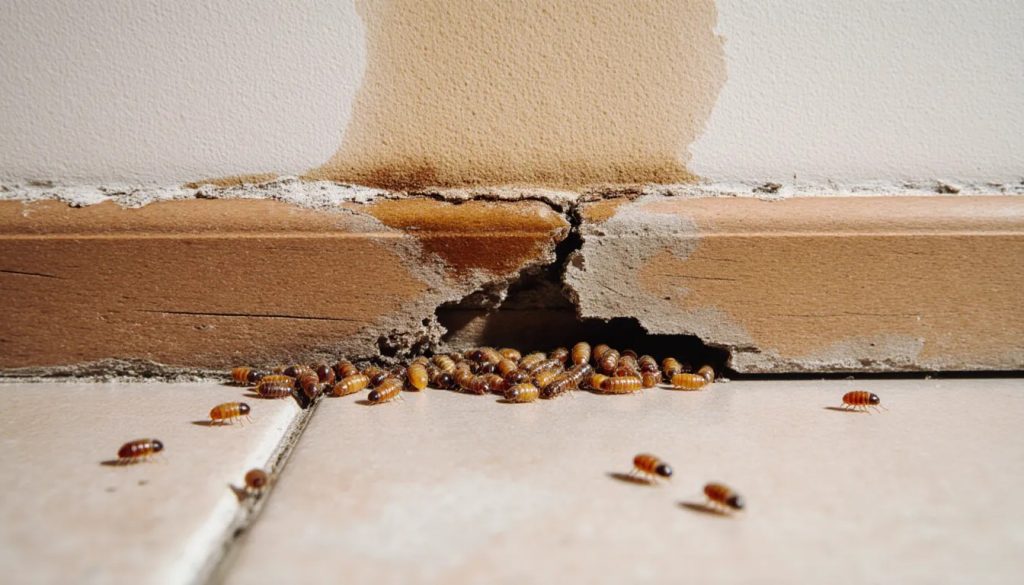
Two of the most expensive problems a home can develop look surprisingly alike from the surface: bubbling paint, warped wood, weakened framing, ceiling stains. One is caused by water finding its way somewhere it shouldn’t; the other is caused by insects eating wood from the inside out. Insurance handles the two very differently, so telling them apart matters — for the repair, for the claim, and for what comes next.
Here’s how to distinguish termite damage from water damage, why the difference matters financially, and what to do about each.
Quick Answer
Termite damage and water damage can both cause warped wood, sagging floors, blistering paint, and weakened framing. The fastest way to tell them apart: termite damage often shows mud tubes on foundations, small piles of pellet-like frass (drywood termite droppings), discarded wings near windows, and hollow-sounding wood. Water damage shows clear moisture trails, stains, musty smells, and damage concentrated near plumbing, roofs, or windows. Termite damage is generally not covered by homeowners insurance; water damage is, when it’s sudden and accidental.
Why the difference matters
Insurance is the biggest practical reason. Homeowners insurance generally covers sudden, accidental water damage (a burst pipe, a storm-driven leak) but excludes termite damage as a preventable maintenance issue. Misidentifying the source can mean filing the wrong type of claim, or missing the window to file at all. The repair work also differs: water damage requires drying, mold remediation, and rebuild; termite damage requires extermination plus structural repair.
How to tell them apart
1. Look for moisture (or its absence)
Water damage is wet — at first. Walls feel damp, paint peels with moisture behind it, materials feel soft. Termite damage, especially from drywood termites, can be present in dry-feeling wood that’s been hollowed from the inside. Tap the wood; termite-eaten wood sounds papery and hollow, while water-damaged wood feels soft and spongy.
2. Check for termite-specific signs
- Mud tubes on foundations, basement walls, or piers (subterranean termites).
- Frass — small pellet-like droppings under wood or sills (drywood termites).
- Discarded wings near windows or light fixtures after a swarm.
- Tiny pinholes in wood or trim.
Our guide on signs of a termite infestation covers each in detail.
3. Check for water-specific signs
- Stains with definite borders, often brown or yellow rings.
- Musty smell indicating mold or wet materials.
- Active drip or trail traceable to a plumbing line, roof, window, or appliance.
- Warping or cupping in flooring without insect activity.
For the broader water-damage signal set, see signs of a hidden water leak and signs of hidden mold.
4. Location is a strong clue
Termites are usually most active where wood meets soil or moisture (foundation sills, crawl-space framing, deck attachments, exterior trim with siding contact). Water damage tracks where water is, behind plumbing walls, under bathrooms, around windows, beneath roof leaks. If the damage doesn’t fit either map, both could be present.
Both at once — a common scenario
Termites follow moisture. A small leak that’s been running for months can attract subterranean termites to the very framing it’s softening. The result is a single failure caused by two overlapping problems, and a higher repair bill than either would have caused alone. In humid regions like Florida, the Gulf Coast, and parts of the Southeast, the combination is common enough that pros routinely check for both in a single inspection.
What insurance does and doesn’t cover
Homeowners insurance treats the two losses very differently:
- Termite damage: Generally not covered, considered preventable through inspection and maintenance.
- Sudden water damage: Often covered — burst pipes, sudden roof leaks, appliance failures.
- Gradual water damage: Generally not covered (slow leaks, deferred maintenance).
- Outside flooding: Requires separate flood insurance (often NFIP).
- Mold from a covered water event: May be partially covered, often capped at $5,000 to $10,000.
For deeper coverage, see does homeowners insurance cover water damage? and filing a water damage insurance claim.
Regional combinations to watch for
In Florida and the Gulf Coast, hurricane water + Formosan and subterranean termites can hit the same structure within a single season. In Texas, slab leaks combined with subterranean termite activity make for tough diagnosis under foundations. In California, drywood termites in coastal homes and slab leaks in slab-on-grade construction overlap geographically. In New York and New Jersey, basement moisture from older plumbing and Eastern subterranean termites in older housing stock often appear together. Whenever damage looks like it might be either, assume it could be both.
What to do next
- Don’t touch the suspect wood with chemicals or paint until you’ve identified the cause.
- Get a professional inspection. Pest control + general contractor or a building-science specialist can identify both quickly.
- Document everything in case insurance is in play.
- If water is found, fix the source first. Drying out is half the cure for both problems.
- If termites are found, treat before repair. Repairing without treating means rebuilding into an active colony.
Mistakes to avoid
- Filing the wrong claim. Termite damage on a water-damage claim wastes your investigation.
- Patching damage without identifying the cause.
- Spraying around suspected termites in ways that don’t reach the colony.
- Ignoring the moisture source that drew termites in the first place.
- Skipping inspection after any sustained water event in a termite-prone region.
Frequently asked questions
How do I tell if it’s termites or water damage?
Look for mud tubes on foundations, frass (pellet-like droppings), discarded wings, or hollow-sounding wood for termites. Look for moisture trails, brown stains, musty smells, and damage concentrated near plumbing, roofs, or windows for water damage. When in doubt, get a professional inspection because both can be present at once.
Does homeowners insurance cover termite damage?
Generally no. Termite damage is treated as a preventable maintenance issue and is excluded from most standard homeowners policies. Regular inspections are the practical financial protection.
Does homeowners insurance cover water damage?
Usually yes for sudden, accidental water damage (a burst pipe, sudden roof leak, appliance failure). Not for gradual leaks, deferred maintenance, outside flooding (separate flood policy), or sewer backups (separate endorsement).
Can termite damage and water damage happen together?
Yes, and the combination is common. Termites follow moisture, so a slow leak that’s been running for months can attract subterranean termites to the softened framing it created. In humid regions, pros routinely inspect for both at once.
Who do I call for damage that could be either?
Start with a licensed pest control company for a termite inspection and a general contractor or water-restoration pro for moisture testing. Many inspectors can spot the signature of both during a single visit and refer you out for treatment.
The bottom line
Termite damage and water damage look alike on the surface and are treated very differently financially. Use the mud-tube vs. moisture-trail test, check the location, and remember the two can show up together — especially in humid or flood-prone regions. The cheapest fix is the one you catch early, before either has spread far enough to demand structural repair.
Need a pro? Browse local pest control providers or water damage restoration companies on Powered By The People using real, aggregated reviews, and confirm any company is licensed and insured before you sign.