
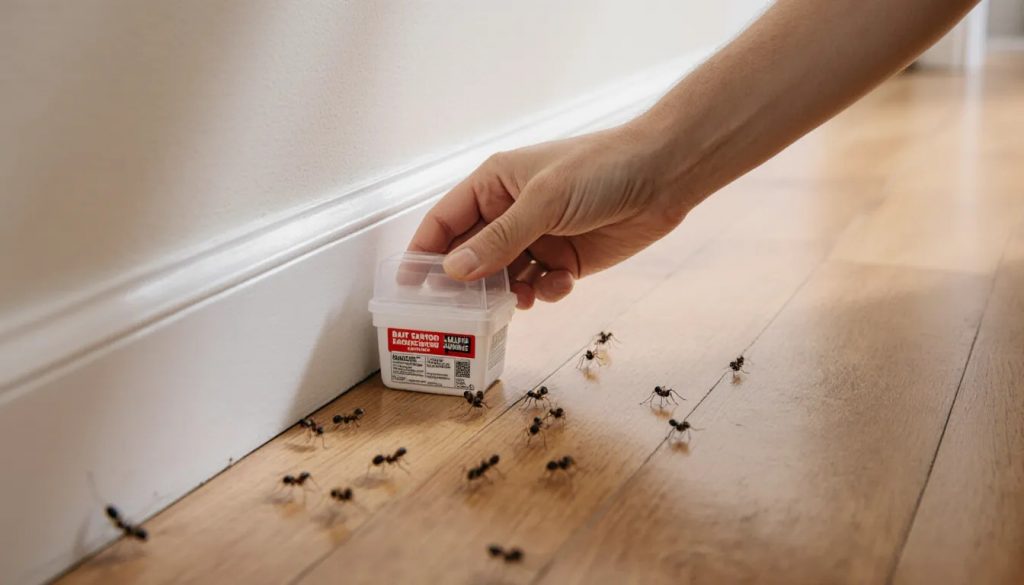
“Why pay $200 for a pest visit when I can grab a can at the hardware store for $12?” It’s a fair question, and for some pest problems the can wins. For others, it makes the situation worse and costs more in the end. Knowing which side of the line your problem falls on saves time, money, and a lot of frustration.
Here’s an honest breakdown of where DIY pest control works, where it doesn’t, and the situations that almost always call for a professional from the start.
Quick Answer
DIY pest control is worth it for small, surface, isolated problems — a handful of ants on a counter, occasional spiders, the rare housefly, and prevention work like sealing entry points and managing moisture. It is not worth it for termites, bed bugs, established rodent infestations, wildlife in walls or attics, or recurring problems, because amateur treatments often spread the pests, miss the colony, or fail to eliminate the moisture source. When in doubt, an inspection is cheap; the wrong DIY can be expensive.
What DIY can handle well
Plenty of pest problems are within reach of a careful homeowner, especially when caught early:
- Small ant trails on counters or along baseboards, treated with bait stations near the trail (not just spray, which kills the visible ants but not the colony).
- Occasional cockroaches or spiders in the kitchen or bath, often a moisture or cleanliness fix more than a pesticide one.
- Pantry moths or small fruit-fly outbreaks, handled by finding and discarding the source and deep-cleaning the area.
- The single mouse with no signs of nesting or droppings beyond one room.
- Prevention work, which is the highest-value DIY of all: sealing gaps, fixing leaks, managing clutter, and trimming back vegetation. Our guide on preventing pest problems covers the full playbook.
What DIY almost never handles
Some problems look small but aren’t, and the wrong intervention can make them dramatically worse:
- Termites. By the time you see the signs, the colony has often been working for months. Off-the-shelf sprays don’t reach subterranean colonies; effective treatment requires bait stations, soil treatment, or fumigation. See signs of a termite infestation for what to watch for.
- Bed bugs. Resistance to over-the-counter pesticides is widespread, and most DIY attempts spread bugs to additional rooms or units. Pro treatment (heat, targeted chemicals, follow-up) is essentially always required.
- Rodent infestations beyond a single mouse. Droppings in multiple rooms, chewed wires, or attic noises mean a population, not a wanderer. Effective work involves entry-point sealing, exclusion, and multi-week trapping.
- Wildlife in walls or attics (squirrels, raccoons, bats). Most states require specific licensing for wildlife removal, and DIY attempts can leave young animals stranded or expose homeowners to disease.
- Recurring or returning infestations. If you treated the same problem six months ago and it’s back, the source isn’t fixed. Time to bring in a pro.
- Anything in HVAC, crawl spaces, or behind walls. Hard to reach, hard to verify, and a frequent driver of pro work in humid regions.
The cost comparison (and why it’s not just about supplies)
DIY supplies for a small problem typically run $20 to $100. A pro visit usually runs $100 to $260 one-time, with recurring plans at $40 to $80 monthly or $100 to $300 quarterly. See pest control cost in 2026 for the full breakdown. The hidden cost of DIY isn’t the supplies; it’s the time spent on the wrong approach, the damage that grows in the meantime, and the eventual pro bill when the DIY fails — often higher because the colony has spread or the materials are now in the walls.
Safety considerations
Pesticide labels are legal documents. Apply more than the label says, in the wrong location, or in homes with kids, pets, asthma, or sensitivities, and the cure can be worse than the pest. Restricted-use pesticides require licensing entirely. Read every label, ventilate, and follow re-entry times. Anything that involves spraying inside HVAC, attics, or fogging multiple rooms is pro work.
By region: where DIY tends to be enough vs. not
Pest pressure shapes the calculus. In Florida and the Gulf Coast, year-round humidity and the presence of subterranean and Formosan termites usually push homeowners toward annual professional service plus DIY prevention. In Texas, fire ants and termites are similar — DIY can handle ants and surface roaches, but termites and serious rodent intrusion need pros. In California, drywood termites along the coast and Argentine ant supercolonies typically out-class DIY; rodent prevention is highly DIY-able. In New York and New Jersey, bed bugs in apartments and urban rats are pro-only problems; carpenter ants and occasional mice in suburbs can be DIY. Seasonally, off-season DIY is usually enough; peak pressure usually calls in a pro.
A real-world example
A homeowner notices small ants in the kitchen and treats with spray. The visible ants die; the colony elsewhere keeps pumping out workers. A month later, the trail is back, and the spray has driven another satellite colony into the laundry room. A pro inspection finds the colony’s main nest under the foundation slab and treats with bait the workers carry back. Total cost: $260, vs. months of frustration plus a return on the original $30 in sprays. The DIY wasn’t lazy; it was just the wrong tool.
Mistakes to avoid
- Spraying the visible insects while the colony is elsewhere.
- Using restricted pesticides or mixing products without reading labels.
- Treating without finding the moisture or entry point that brought the pests in.
- DIY-ing termites or bed bugs. Both reward speed; both punish amateur attempts.
- Ignoring repeat problems. Recurrence is a signal to escalate.
Frequently asked questions
Are DIY pest control treatments effective?
For small, surface, isolated problems and prevention work, yes. For termites, bed bugs, established rodent infestations, wildlife, and recurring problems, DIY almost always fails and can make the situation worse by spreading pests or missing the colony.
When should I hire a pest control professional instead of DIY?
Hire a pro for termites, bed bugs, large rodent populations, wildlife in walls or attics, anything in HVAC or behind walls, and any pest problem that has returned after a previous treatment. Professional inspection is worth the cost because the wrong DIY can be expensive in damage and time.
How much money does DIY pest control actually save?
DIY supplies for small problems run $20 to $100, vs. $100 to $260 for a one-time pro visit. The real cost of DIY on the wrong problem is the time lost, the damage that continues during failed treatment, and the eventual pro bill when the issue worsens.
Is DIY pest control safe?
Done carefully, yes. Always read the full pesticide label, apply only as directed, ventilate the area, follow re-entry times, and keep kids and pets clear during application. Restricted-use products require licensing; anything fogged or applied in HVAC, attics, or large areas is professional work.
Can I treat termites myself?
No, in almost every case. Effective termite control requires soil treatment, bait stations, or fumigation that off-the-shelf products cannot deliver, and a missed colony continues to cause structural damage that homeowners insurance generally will not cover.
The bottom line
DIY pest control works when the problem is small, surface, and isolated, and when the homeowner is doing the boring prevention work that pests respond to most. It fails when the problem is structural, the colony is established, or the species (termites, bed bugs, wildlife) is beyond what off-the-shelf products can reach. Use DIY where it shines, hire a pro where it doesn’t, and remember that a $300 inspection often saves $3,000 in damage.
Need a professional? Browse local pest control providers on Powered By The People using real, aggregated reviews, and confirm any company is licensed and insured before you sign.