
Mold is one of those problems that feels urgent and expensive the moment you find it, and the quotes you get back can swing wildly. One company says a few hundred dollars, another says five figures. Understanding what drives the price helps you tell a fair estimate from a scare tactic, and decide what’s worth doing professionally versus on your own.
Here’s what mold remediation actually costs in 2026, what pushes the number up, and how insurance fits in.
Quick Answer
Most homeowners pay roughly $1,200 to $3,750 for professional mold remediation in 2026, with a national average around $2,300. Pricing typically runs $10 to $25 per square foot of affected area, dropping toward $10 to $18 for larger jobs. Small bathroom spots sit at the low end; mold inside HVAC systems ($3,000 to $10,000 per system) or widespread growth across multiple rooms can reach $10,000 to $30,000 or more. Insurance may help if the mold came from a sudden, covered water event, but it is usually capped.
What is mold remediation (and how is it different from removal)?
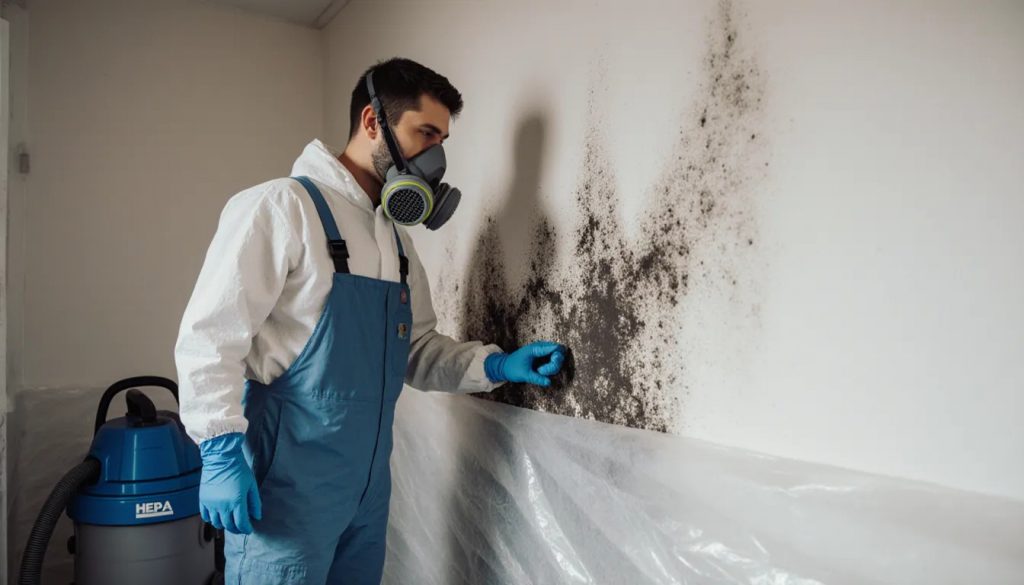
“Mold removal” suggests you can eliminate every spore, which isn’t realistic since mold spores exist everywhere. Remediation is the accurate term: containing the affected area, removing contaminated materials, cleaning and treating surfaces, and fixing the moisture source so it doesn’t come back. A quote that promises to “remove all mold forever” is a sign the company is overselling.
How much does mold remediation cost in 2026?
The single biggest driver is the size and location of the affected area. As a rough guide for 2026:
- Small, contained spot (under ~10 sq ft): often $500 to $1,500, sometimes a DIY-able job if it’s surface mold on a hard surface.
- Medium job (a room, ~10 to 100 sq ft): commonly $1,500 to $3,750, the range most homeowners land in.
- Large or whole-area (300+ sq ft, basements, multiple rooms): $3,000 to $5,400 for a typical basement, climbing toward $10,000 to $30,000+ for severe, widespread growth.
- HVAC system mold: $3,000 to $10,000 per system, because ductwork is labor-intensive to clean.
Per square foot, expect about $10 to $25, with the rate easing to $10 to $18 once the job exceeds 100 square feet.
What increases the cost
Two identical-looking mold problems can be quoted very differently. The factors that move the number:
- Location in the home. A bathroom wall is cheap to reach; mold inside HVAC, crawl spaces, or behind foundation walls is far more expensive.
- How deep it’s gone. Surface mold wipes down; mold that has penetrated drywall, insulation, or framing means demolition and rebuild.
- Square footage. Bigger affected areas cost more in total, even as the per-foot rate drops.
- Containment and labor. Labor is the largest line item, covering sealing off the area, HEPA filtration, removal, and cleaning.
- Testing. Pre- and post-remediation mold testing adds a few hundred dollars but verifies the work.
- The underlying water problem. If a leak or flood caused it, you’re also paying to fix that source.
National average vs. high-cost states
The roughly $2,300 national average masks real regional spread. Labor rates and cost of living drive most of it, so the same job in a major metro on the coasts (think parts of California, the Northeast, or high-demand Florida markets after storm season) can run noticeably above the national midpoint, while lower-cost regions in the Midwest and South often come in under it. Humid states also see more mold jobs overall, which can affect both demand and pricing. If you’re comparing quotes, judge them against local rates, not a single national number.
Does insurance cover mold remediation?
Coverage hinges on the cause of the moisture, not the mold itself. If the mold grew from a sudden, covered event, like a burst pipe or a storm-driven leak, your homeowners policy may treat remediation as part of that water-damage claim. If it traces to gradual leaks, humidity, or deferred maintenance, it’s typically excluded. Even when covered, many policies cap mold payouts at $5,000 to $10,000 regardless of the actual bill. Our guide on filing a water damage insurance claim walks through documenting the loss so the mold portion has the best chance of being covered.
Why humid and storm-prone regions see more mold
Mold needs moisture, so geography matters. Across the humid Southeast and Gulf Coast, high year-round humidity keeps basements, crawl spaces, and bathrooms damp enough for mold to take hold without any dramatic leak. In Florida and other hurricane-exposed areas, post-storm flooding sets off a wave of mold a week or two after the water recedes. Homes in colder regions aren’t exempt either: a burst pipe in a freeze can feed mold inside walls before anyone notices. Wherever you live, the cheapest mold job is the one you prevent by drying water fast and fixing leaks early.
A real-world example
A homeowner finds dark spotting spreading across a bathroom ceiling and the wall behind the shower. One company quotes $900 for a contained, surface-level cleanup; another insists the “whole house is contaminated” and quotes $14,000 on the spot. A third inspects, finds the growth is limited to the bathroom and a small section of adjacent drywall, and quotes $2,400 including fixing the leaking shower pan. The middle path, scoped and explained, is almost always the honest one. High-pressure, fear-driven mega-quotes deserve the same skepticism as any other home-service hard sell.
Mistakes to avoid
- Treating the mold but not the moisture. It will return if the leak or humidity isn’t fixed.
- Accepting a five-figure quote under pressure without a second opinion.
- Skipping containment on a big job, which spreads spores through the house.
- Assuming insurance will cover it without confirming the cause is a covered peril.
- Hiring whoever can “start today” without confirming they’re licensed and insured.
Frequently asked questions
How much does mold remediation cost in 2026?
Most homeowners pay about $1,200 to $3,750, with a national average around $2,300. Pricing typically runs $10 to $25 per square foot, easing toward $10 to $18 on larger jobs. Severe or whole-house growth can reach $10,000 to $30,000 or more.
Does homeowners insurance cover mold?
Sometimes. If the mold resulted from a sudden, covered water event like a burst pipe or storm leak, remediation may be covered as part of that claim. Mold from gradual leaks, humidity, or neglect is usually excluded, and many policies cap mold coverage at $5,000 to $10,000.
What makes mold remediation more expensive?
Hard-to-reach locations (HVAC, crawl spaces, behind foundation walls), mold that has penetrated building materials, larger affected areas, extensive containment and labor, and fixing the underlying water source all raise the price.
Can I remove mold myself?
Small surface spots under about 10 square feet on hard surfaces can sometimes be cleaned safely by a homeowner. Larger areas, mold in HVAC or building materials, or any health concerns call for a professional with proper containment.
Is mold removal permanent?
No company can permanently remove all mold spores, since they exist everywhere. Proper remediation removes active growth and, crucially, fixes the moisture source so it does not return. Be wary of guarantees to eliminate mold forever.
The bottom line
Budget roughly $1,200 to $3,750 for a typical mold remediation in 2026, knowing small jobs run less and severe or HVAC cases run much more. Judge quotes against local rates, insist on fixing the moisture source, and treat fear-driven five-figure pitches with caution. If a water event caused the mold, document it for insurance before the cleanup begins.
Looking for help with a mold problem? Compare local mold remediation companies on Powered By The People using real, aggregated reviews, and confirm any company is licensed and insured before you hire.