
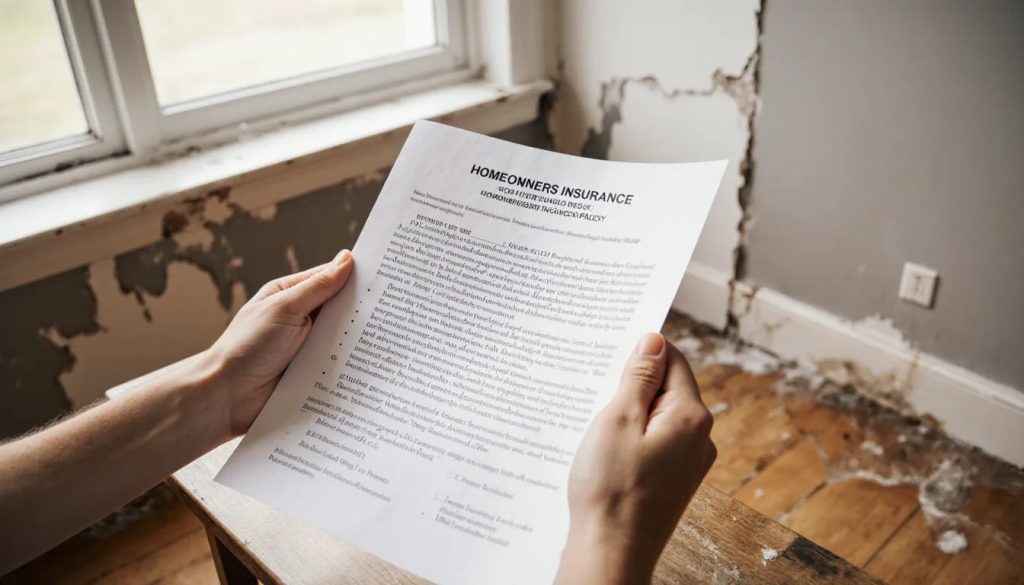
It’s one of the most-Googled homeowner questions, and the answer is more nuanced than yes or no. Homeowners insurance covers some water damage, often a lot of it, but it explicitly excludes other common scenarios that catch people by surprise when they file. Knowing which side of the line your situation falls on, before the leak happens, is the difference between a covered claim and an out-of-pocket repair.
Here’s a clear breakdown of what’s typically covered, what isn’t, the gray areas, and the endorsements that close the most common gaps.
Quick Answer
Standard homeowners insurance typically covers water damage that is sudden and accidental — burst pipes, appliance failures, storm-driven roof leaks, water-heater ruptures. It typically does not cover gradual leaks, damage attributed to deferred maintenance, outside flooding (which needs a separate flood policy, often through NFIP), or sewer/drain backups (which require a specific endorsement). Mold from a covered event may be partially covered but is usually capped. The cause of the moisture decides the claim.
The “sudden and accidental” rule
Insurers apply one core test to most water claims: was the damage sudden and unexpected, or did it develop gradually? A pipe that bursts in a freeze is sudden. A shower pan that has been leaking slowly for two years is gradual. The first is generally covered; the second generally isn’t, because the homeowner is expected to maintain the home. This single distinction explains the vast majority of approved versus denied water claims.
What homeowners insurance typically covers
- Burst pipes — including pipes that crack during a freeze.
- Appliance failures — a washing-machine hose that lets go, a dishwasher line that ruptures.
- Water heater leaks or ruptures from sudden tank failure.
- Storm-driven roof leaks — water entering through a roof that was damaged in a covered storm event.
- Accidental overflow from a tub, sink, or toilet.
- Mitigation costs — towels, fans, and emergency vendor work to limit further damage are typically reimbursable.
What homeowners insurance typically does not cover
- Gradual leaks — slow plumbing leaks, persistent shower-pan failures, hidden drips. The longer it ran, the harder the claim.
- Damage attributed to deferred maintenance — the policy expects you to fix small problems before they become big ones.
- Flood from outside — rising water from storms, overflowing rivers, storm surge. Requires flood insurance (often via NFIP).
- Sewer and drain backups — typically excluded unless you’ve added a sewer-backup endorsement.
- Sump pump failure — usually excluded unless you’ve added an endorsement.
- Foundation seepage — water entering through cracks in the foundation due to long-term ground moisture is generally not covered.
- Earthquake-related water damage — separate earthquake coverage required.
The gray areas to ask about
- Mold. When mold grows from a sudden, covered event, remediation may be covered, often with a cap of $5,000 to $10,000. Mold from gradual moisture is usually excluded.
- Ice dams. Often covered as a sudden weather event, but ice-dam clauses vary; check yours.
- Hurricane water. Wind-driven rain may be covered under wind, while storm-surge flooding is not (and needs flood insurance).
- Cosmetic vs. structural damage. Some metal-roof policies exclude cosmetic hail damage; check before you file.
Endorsements that close common gaps
Three add-ons matter for water risk and are worth pricing on your next renewal:
- Sewer backup endorsement — small additional premium for substantial protection.
- Sump pump / water backup coverage — pairs well with a sewer endorsement, especially in basements and flood-prone suburbs.
- Flood insurance — separate policy through NFIP or private market; required in flood zones and reasonable elsewhere.
ACV vs. RCV: how you actually get paid
Most water claims involve the same payout terms as roofing: Actual Cash Value deducts depreciation for age, while Replacement Cost Value pays for replacement at today’s cost, usually in two stages. Check your declarations page before you need to file.
Regional patterns
The same policy plays out very differently by region. In Florida and the Gulf, hurricane water damage triggers separate deductibles, and the wind-vs-flood line is the central dispute after major storms. In Texas, the 2021 freeze legacy left many insurers tightening “freeze prevention” language; preventive heat and dripping faucets are expected. In New York and New Jersey, aging building plumbing and basement flooding drive a high rate of claims; sewer-backup endorsements are nearly essential. In California, earthquake-related water damage is excluded from standard policies and handled through California Earthquake Authority coverage. Always read your policy against your local risk.
A real-world example
A homeowner’s washing-machine hose ruptures Saturday morning, soaking the laundry room and adjacent kitchen. She shuts the water, photographs everything, and calls her insurer that afternoon. Covered — sudden, accidental, well-documented. A week later, her neighbor calls about a shower pan that’s been leaking “a little” for over a year, now showing through a downstairs ceiling. Denied — gradual damage attributed to deferred maintenance. Same insurer, very different outcomes.
Mistakes to avoid
- Assuming flooding is covered. It’s not, under a standard policy.
- Skipping the sewer-backup endorsement in basement-prone homes.
- Waiting to report. Speed matters for claim outcomes.
- Cleaning up before documenting. Photos and video first.
- Ignoring small leaks. They become “gradual” denials.
Frequently asked questions
Does homeowners insurance cover water damage?
Usually, when the damage is sudden and accidental (a burst pipe, appliance failure, storm-driven roof leak, water-heater rupture). It typically does not cover gradual leaks, deferred maintenance, outside flooding (needs separate flood insurance), or sewer backups (needs an endorsement).
Is flooding covered by homeowners insurance?
No. Outside flooding, including storm surge and overflowing waterways, is excluded from standard homeowners policies. It requires separate flood insurance, often through the National Flood Insurance Program (NFIP).
Does insurance cover mold from water damage?
Sometimes. If the mold grew from a sudden, covered water event such as a burst pipe, cleanup may be covered, though most policies cap mold payouts at around $5,000 to $10,000. Mold from gradual moisture or deferred maintenance is generally excluded.
Is sewer backup covered by homeowners insurance?
Typically not. Sewer and drain backup coverage usually requires a separate endorsement, often inexpensive relative to the protection. Sump pump failure is similarly excluded unless you add water-backup coverage.
What is the difference between ACV and RCV?
Actual Cash Value (ACV) deducts depreciation based on the age and condition of the damaged item or structure. Replacement Cost Value (RCV) pays to replace it at today’s cost, usually in two stages — an initial ACV-based check, then the recoverable depreciation once repairs begin.
The bottom line
Homeowners insurance is a good safety net for sudden, accidental water damage, and a poor one for slow leaks, outside flooding, and sewer backups unless you’ve specifically added coverage. Read your declarations page, add the endorsements that match your region’s risks (sewer backup if you have a basement; flood if you’re anywhere within reasonable proximity of a flood zone), and act fast when an event happens. For the actual claim mechanics, see our guide on filing a water damage insurance claim.
Need a restoration company? Browse local water damage restoration companies on Powered By The People using real, aggregated reviews, and confirm any company is licensed and insured before you sign.