
Replacing an HVAC system is one of the biggest single expenses a homeowner faces, and the quotes can feel impossible to compare. One contractor wants $6,000, another $16,000, and both are pointing at the same house. The gap usually comes down to what’s actually being replaced and how efficient the new equipment is. Once you understand the pieces, the numbers stop feeling random.
Here’s what a new HVAC system really costs in 2026, what drives the price up or down, and how to avoid overpaying.
Quick Answer
In 2026, replacing a full HVAC system (heating and cooling together) typically runs $7,500 to $17,500, with many homeowners landing around $11,000 to $14,000. A central air conditioner alone is about $3,000 to $15,000 installed, and a gas furnace runs $3,800 to $10,000. Adding or replacing ductwork can add $1,000 to $2,700+. The biggest cost drivers are system size, efficiency rating, ductwork, and your region’s labor rates.
What’s included in an HVAC replacement?
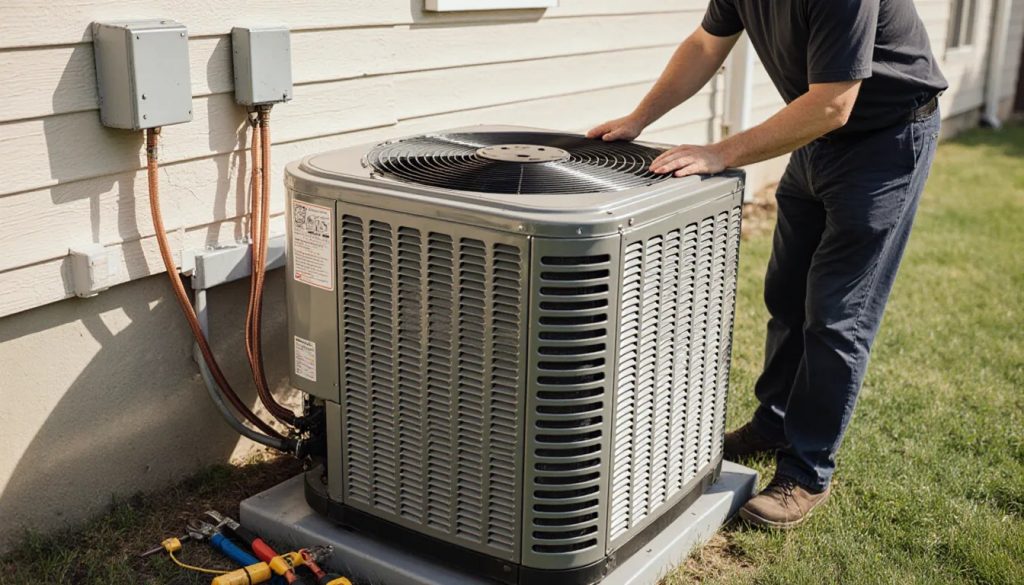
“HVAC system” can mean different things, which is why quotes vary. A full replacement usually covers the outdoor condenser (the AC), the indoor furnace or air handler, and the coil that connects them. Some quotes also include new ductwork, a thermostat, refrigerant lines, and permits, while others quietly leave those out. The first thing to check on any estimate is exactly what equipment and labor it covers, because that’s where a “cheaper” bid often turns out to be incomplete.
How much does HVAC replacement cost in 2026?
- Central air conditioner (installed): $3,000 to $15,000, depending on size and efficiency.
- Gas furnace: $3,800 to $10,000; an electric furnace runs roughly $1,700 to $7,100.
- Full system (furnace + AC together): commonly $7,500 to $17,500, with a typical mid-range job around $11,000 to $14,000.
- Heat pump (heating and cooling in one): overlaps the full-system range and is increasingly popular in milder climates.
- Ductwork: add about $1,000 to $2,700 for a typical home if ducts need replacing.
Replacing the furnace and AC at the same time usually saves $1,000 to $2,000 in labor versus doing them separately, and it ensures the two pieces are matched for efficiency.
What increases the cost
- System size (tonnage). Bigger homes need larger units, but bigger isn’t automatically better; a proper load calculation prevents an oversized, short-cycling system.
- Efficiency rating (SEER2). Higher-efficiency equipment costs more upfront but lowers monthly bills over its lifespan.
- Ductwork. Old, leaky, or undersized ducts add cost but protect the performance of the new system.
- Fuel type and conversions. Switching from one system type to another (say, to a heat pump) adds labor.
- Accessibility and region. Tight installs and high-cost-of-living areas push labor higher.
National average vs. high-cost states
The mid-five-figure averages hide real regional variation. Labor rates and climate demands drive most of it: high-cost metros in California and the Northeast tend to sit above the national midpoint, while much of the South and Midwest comes in lower. Climate matters too. In extreme-heat states like Arizona and Texas, systems run hard for months and tend toward larger, higher-capacity equipment, while cold-climate homes prioritize heating capacity. Judge a quote against local pricing, not a single national figure, and get at least three bids.
Repair or replace?
If your system is under about 10 to 12 years old and the fix is minor, repair usually wins. As equipment ages past that and repairs stack up, replacement starts to pencil out, especially given the efficiency gains. A breakdown in peak season is a high-pressure moment, so it helps to have thought it through in advance; our guide on HVAC repair vs. replacement breaks down the math, and if your system fails in a heat wave, our emergency guide covers what to do first.
Does insurance cover HVAC replacement?
Usually not. Homeowners insurance covers sudden, accidental damage, so a unit destroyed by a lightning strike or house fire may be covered, but normal wear, age, and mechanical breakdown are not. That’s the gap a separate home warranty or equipment-breakdown coverage is meant to fill. Before assuming anything, read your policy and ask your agent which scenarios apply.
A real-world example
A 14-year-old AC dies in July. One company quotes $6,500 to swap only the outdoor unit; another quotes $13,000 for a matched furnace-and-AC system with a load calculation, new coil, and a higher-efficiency rating. The cheaper bid isn’t a scam, but pairing a new outdoor unit with an aging indoor furnace and mismatched coil often means lower efficiency and more breakdowns. The homeowner who asks each bidder to spell out exactly what’s included can compare them honestly instead of just by the bottom line.
Mistakes to avoid
- Comparing quotes by price alone without checking what equipment and labor each includes.
- Skipping a load calculation and letting a contractor “eyeball” the size.
- Oversizing the system, which wastes money and causes short-cycling.
- Agreeing to financing under pressure during a peak-season breakdown.
- Hiring without confirming the contractor is licensed and insured.
Frequently asked questions
How much does it cost to replace an HVAC system in 2026?
A full furnace-and-AC replacement typically runs $7,500 to $17,500, with many homeowners around $11,000 to $14,000. A central AC alone is about $3,000 to $15,000 installed, and a gas furnace runs $3,800 to $10,000. Ductwork can add $1,000 to $2,700 or more.
Is it cheaper to replace the furnace and AC together?
Usually yes. Replacing both at once typically saves $1,000 to $2,000 in labor versus separate jobs, and it ensures the equipment is matched for efficiency rather than pairing new and aging components.
What affects the price of a new HVAC system?
System size (tonnage), efficiency rating (SEER2), whether ductwork needs replacing, fuel type or system conversions, installation difficulty, and the labor rates in your region are the main factors.
Does homeowners insurance cover HVAC replacement?
Generally only when the damage is sudden and accidental, such as a lightning strike or fire. Normal wear, age, and mechanical breakdown are not covered; a home warranty or equipment-breakdown coverage is designed for those.
How many HVAC quotes should I get?
At least three. Ask each contractor to itemize the equipment, efficiency rating, and labor so you can compare on equal footing instead of by the bottom-line price alone.
The bottom line
Plan for roughly $7,500 to $17,500 for a full HVAC replacement in 2026, knowing a single component costs less and high-efficiency or duct-heavy jobs cost more. Get three itemized quotes, insist on a proper load calculation, and don’t let a peak-season breakdown rush you into the first bid. Match the equipment, match the efficiency, and you’ll get the most out of the investment.
Comparing HVAC companies? Browse local air conditioning and heating companies on Powered By The People using real, aggregated reviews, and confirm any contractor is licensed and insured before you sign.