
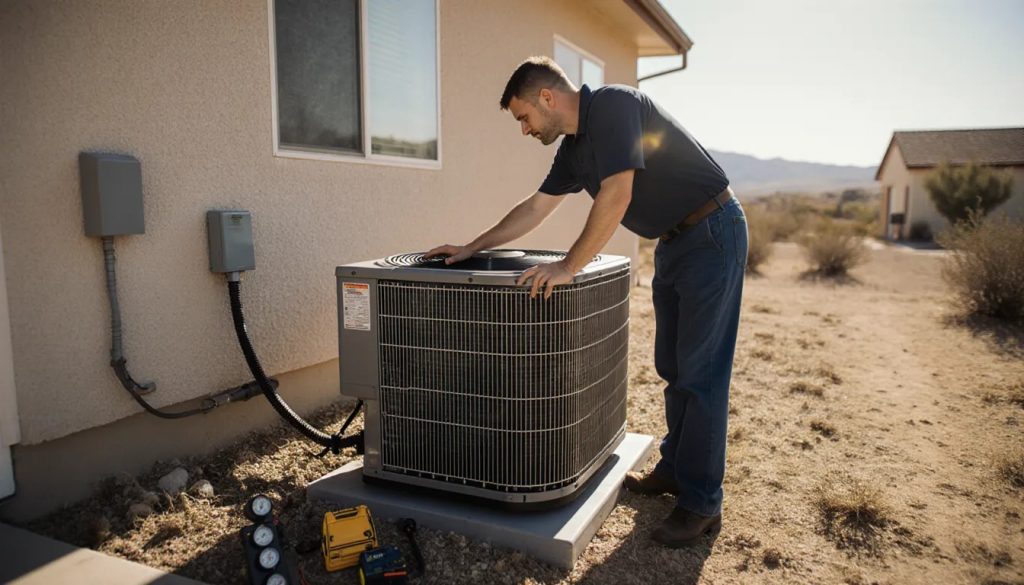
When an air conditioner quits in the middle of a heat wave, it stops being a comfort problem and starts being a safety one. Indoor temperatures climb fast, and for older adults, young kids, and anyone with health conditions, that’s genuinely dangerous. The good news: a few quick checks fix a surprising number of outages, and knowing the right moves keeps everyone safe while you wait for help.
Here’s what to do the moment the air stops blowing cold, when it’s a true emergency, and how to avoid getting gouged by a high-pressure “emergency” repair.
Quick Answer
If your AC fails in extreme heat, first run three quick checks: confirm the thermostat is set to cool, reset the circuit breaker once, and look at the air filter and outdoor unit for ice or heavy clogging. If those don’t restore cooling, call an HVAC pro. While you wait, hydrate, close blinds against the sun, and move anyone vulnerable to a cooler location. Treat a total failure during a heat wave as urgent, because indoor heat can become a health risk quickly.
Is a broken AC an emergency?
During mild weather, a failed AC is an inconvenience you can schedule around. During extreme heat it’s different. Indoor temperatures can rise into unsafe territory within hours, and the people most at risk, infants, older adults, and those with chronic conditions, are also the least able to tolerate it. The Centers for Disease Control and Prevention warns that heat exhaustion and heatstroke are real threats in these conditions. If the house is heating up and someone vulnerable is home, treat it as urgent.
Quick checks before you call
Before you pay for an after-hours visit, spend two minutes on the things that cause a lot of “emergencies”:
- Thermostat. Confirm it’s set to cool and a few degrees below room temperature, and that it didn’t get bumped to heat or off.
- Circuit breaker. A surge can trip the AC’s breaker. Flip it back once. If it trips again, stop, because that points to an electrical fault a pro should handle.
- Air filter. A clogged filter chokes airflow and can shut a system down. If it’s gray and packed, replace it.
- Ice on the unit. If you see ice on the indoor coil or the lines, the system is frozen. Turn it off and let it thaw before running it again.
If none of that brings the cold air back, it’s time to call a professional rather than keep cycling the system, which can make things worse.
How to stay safe while you wait
Cooling a body matters more than cooling a house. Drink plenty of water and skip caffeine and alcohol, which dehydrate you. Wear light, loose clothing, and run cool water over your wrists or soak your feet to bring your temperature down. Close curtains and blinds on the sunny side of the house, and if indoor heat keeps climbing, relocate to a mall, library, or public cooling center. Most importantly, move infants, older adults, and anyone with health issues somewhere cool early rather than waiting it out. Heavy sweating that suddenly stops, dizziness, nausea, or confusion are warning signs of heat illness, and confusion or fainting is a medical emergency, so call 911.
When to call for emergency HVAC service
A complete failure during dangerous heat justifies an emergency call, especially with vulnerable people in the home. So does a breaker that trips repeatedly, a burning smell, or any sign of an electrical problem. Many HVAC companies run after-hours service for exactly this. When you call, describe what you’ve already checked, because it helps the technician arrive prepared.
Repair or replace?
If your system is aging and failures are becoming a pattern, an emergency breakdown is often the moment that forces the repair-versus-replace decision. A high-pressure pitch in 100-plus-degree heat is not the time to make a rushed five-figure choice. Our guide on HVAC repair vs. replacement walks through how to weigh the age of the unit, repair history, and cost so you don’t overpay under pressure.
Heat makes some regions especially risky
In Arizona and the desert Southwest, an AC failure when it’s 110 degrees outside is a genuine emergency, and the urgency is exactly what some operators exploit with inflated “emergency” pricing and unnecessary full replacements. In Texas and across the South, the heat index from high humidity can make a stalled AC dangerous even at lower temperatures. Wherever sustained heat is the norm, a little off-season maintenance and a known, trusted HVAC company on hand beats scrambling during the first big heat wave.
Don’t let urgency lead to a scam
Extreme heat and a sweating family create the same pressure that fuels other home-service scams. Be wary of an unfamiliar company that shows up fast, pushes an immediate full-system replacement, and wants a large cash deposit on the spot. Even in an emergency, it’s worth confirming you’re dealing with a licensed and insured contractor and watching for the usual contractor scam red flags.
A real-world example
It’s a Saturday afternoon in July, the thermostat reads 88 inside and climbing, and the AC won’t kick on. A quick look shows a tripped breaker; flipping it back restores cooling, and the “emergency” is over in five minutes. Another household with the same symptom finds the breaker holds but the outdoor unit is iced over, switches the system off to thaw, moves grandma to a neighbor’s cool living room, and books a morning service call instead of paying triple for midnight work. Same heat, calm decisions.
Mistakes to avoid
- Repeatedly resetting a breaker that keeps tripping. That’s an electrical fault, not a reset problem.
- Running a frozen system. Let it thaw first or you risk bigger damage.
- Ignoring vulnerable people while you focus on the equipment.
- Agreeing to a full replacement under pressure during the heat of the moment.
- Hiring the first company that answers without a quick check that they’re licensed and insured.
Frequently asked questions
Is a broken air conditioner an emergency?
During extreme heat, yes, especially if infants, older adults, or people with health conditions are home. Indoor temperatures can climb to unsafe levels within hours, so a total failure in a heat wave should be treated as urgent.
Why did my AC stop working in the heat?
Common causes include a tripped breaker, a thermostat set wrong, a clogged air filter, or a frozen coil. Extreme demand during a heat wave can also overwhelm an aging or undersized system. Quick checks rule out the simple causes before you call a pro.
What should I do while waiting for AC repair in a heat wave?
Hydrate with water, avoid caffeine and alcohol, wear light clothing, close blinds against the sun, and cool your body with water on your wrists or feet. Move anyone vulnerable to a cooler location, and watch for signs of heat illness like dizziness, nausea, or confusion.
Should I repair or replace an AC that failed?
It depends on the unit’s age, repair history, and the cost of the fix. A breakdown during a heat wave is a high-pressure moment, so avoid rushing a major decision. Weigh repair versus replacement carefully once everyone is safe and cool.
How do I avoid an emergency AC repair scam?
Be cautious with companies that appear fast, demand large cash deposits, and push an immediate full replacement. Confirm the contractor is licensed and insured and watch for high-pressure tactics, even when you’re hot and stressed.
The bottom line
When the AC dies in dangerous heat, protect people first and equipment second. Run the quick checks, keep everyone hydrated and cool, and call a pro if the simple fixes don’t work. Treat a total failure during a heat wave as urgent, but don’t let that urgency push you into an overpriced replacement or a contractor you have not checked out.
Need a trusted HVAC company before the next heat wave? Find local air conditioning and heating companies on Powered By The People and compare providers using real, aggregated reviews.