
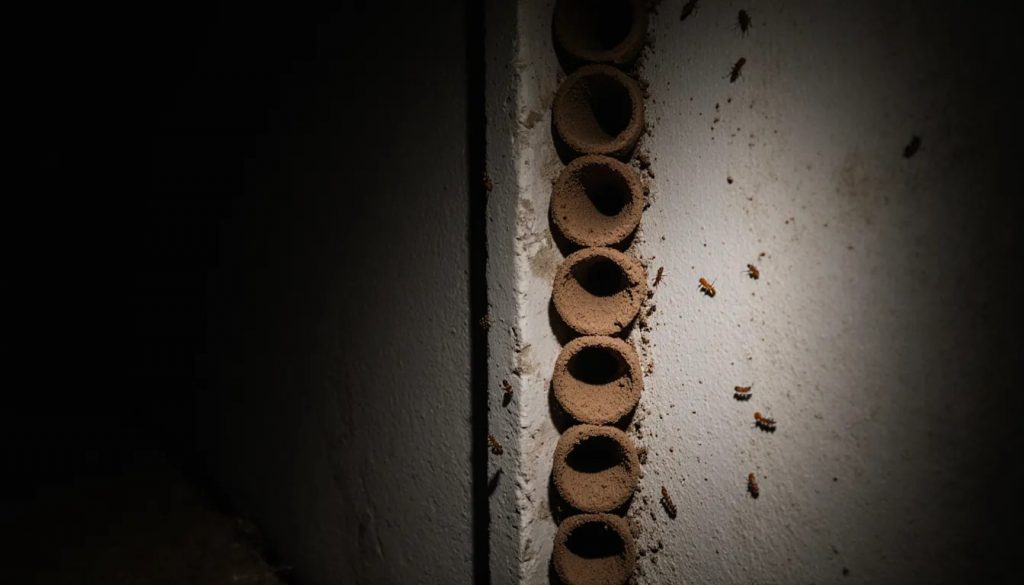
Termites are quiet. They don’t crash through walls or set off alarms; they work in the dark, in the wood, for months or years before most homeowners notice anything is wrong. By the time the damage is visible, repairs can run into the thousands. Spotting the early signals, the small, easy-to-miss ones, is what keeps a small problem from becoming a structural one.
Here are the termite warning signs worth knowing, why they matter, and when it’s time to call a pro.
Quick Answer
The most common signs of a termite infestation are pencil-thick mud tubes along foundations or basement walls, piles of discarded wings near windows or doors after a swarm, wood that sounds hollow when tapped, small pellet-like droppings (frass), blistering or bubbling paint, and doors or windows that suddenly stick. If you see any of these, get a professional inspection quickly. Termite damage gets exponentially more expensive the longer it goes unnoticed.
What termites are actually doing in your walls
Subterranean termites live in the soil and travel up into your home through hidden tunnels, eating wood from the inside out. Drywood termites live entirely inside the wood they consume, often in attics and wall framing. Both can spend years feeding before the damage shows on the surface, which is exactly why the signs below are worth checking even when nothing seems wrong.
The signs you shouldn’t ignore
1. Mud tubes on foundations or basement walls
Pencil-thick brown tubes running up a foundation wall, pier, or crawl-space block are how subterranean termites travel from soil to wood without exposure to air. Even one tube is a clear sign of active or recent termite activity and warrants a professional inspection.
2. Discarded wings near windows or doors
When termite colonies mature, swarmers fly off to start new ones, then shed their wings. Small piles of identical, translucent wings on windowsills, in spider webs, or near light fixtures often go unnoticed but are a textbook sign a colony is nearby.
3. Wood that sounds hollow when you tap it
Termites eat wood from the inside, leaving a thin shell. Tapping a baseboard, door frame, or beam that should sound solid and hearing a papery, hollow knock is a red flag. Try this around bathrooms, kitchens, basements, and any spot prone to moisture.
4. Frass (pellet-like droppings)
Drywood termites push small, gritty pellets, called frass, out of tiny holes in the wood. It often looks like a fine pile of sawdust or coffee grounds beneath a beam, sill, or piece of trim. The pellets are uniform in shape and worth a closer look.
5. Blistering or bubbling paint
Paint that suddenly looks rippled, blistered, or bubbled, often confused with water damage, can mean termites have hollowed the wood underneath and moisture is getting in. Any wood that looks “off” deserves a poke and a tap.
6. Doors or windows that suddenly stick
As termites tunnel through structural wood, the frames and trim can warp slightly. A door that always opened smoothly and now sticks, or a window that’s harder to slide, is sometimes the first thing a homeowner actually notices.
Subterranean vs. drywood: why your region matters
The kind of termite you’re dealing with shapes the signs and the treatment. Subterranean termites need contact with soil and tend to leave mud tubes; they’re the dominant species across much of the country, including Texas, Florida, the Gulf Coast, and the Southeast, with eastern subterranean species reaching into New York and New Jersey. Drywood termites live entirely inside dry wood and are most common in coastal California, parts of Florida, and the Gulf, often showing up as frass piles rather than mud tubes. In humid states like Florida, year-round activity means problems can develop fast, and a Formosan termite colony, the most destructive subterranean variety, can do major damage in a single season.
When to call a pro
If you see any of the signs above, get a professional inspection rather than waiting. In high-risk states (Florida, Texas, Louisiana, coastal California), an annual inspection is reasonable insurance even without symptoms. Termite damage isn’t typically covered by homeowners insurance because it’s considered preventable, so catching it early is the only meaningful financial protection.
A real-world example
A homeowner notices her bedroom door has started sticking, and a few weeks later sees what looks like sawdust on the windowsill. She vacuums it up. Six months later, a contractor opening the wall to fix the sticking door finds the studs riddled with drywood termite galleries. A $300 inspection a year earlier would have caught it; the repair runs $11,000. The early signs were there; she just didn’t know what they meant.
Mistakes to avoid
- Brushing off “sawdust” without checking whether it’s frass.
- Painting over blistered wood instead of investigating what’s under it.
- DIY-ing a treatment for a mature colony, which usually fails and lets damage continue.
- Assuming insurance will cover the damage. It typically won’t.
- Hiring whoever knocks on the door rather than confirming the inspector is licensed and insured.
Frequently asked questions
What are the first signs of termites?
The earliest clues are usually mud tubes on foundation walls, small piles of discarded wings near windows after a swarm, frass (pellet-like droppings) beneath wood, hollow-sounding wood when tapped, blistering paint, and doors or windows that suddenly stick.
How fast can termites damage a home?
It depends on the species and colony size. A mature subterranean or Formosan colony can cause significant structural damage in months; drywood colonies work more slowly but can hollow framing over years before being detected.
Does homeowners insurance cover termite damage?
Generally no. Termite damage is considered preventable through maintenance and inspection, so most policies exclude it. That makes early detection your main financial protection.
Should I get a termite inspection if I haven’t seen signs?
In high-risk states like Florida, Texas, Louisiana, and coastal California, an annual professional inspection is a reasonable precaution. Elsewhere, every two to three years or before buying a home is a common cadence.
What is frass?
Frass is the small, gritty, pellet-like droppings that drywood termites push out of tiny holes in infested wood. It often looks like a fine pile of sawdust or coffee grounds and is a clear sign of activity.
The bottom line
Termites do their worst work invisibly. Mud tubes, discarded wings, frass, hollow wood, blistering paint, and sticking doors are the small clues that tell you to investigate before the damage hits the studs. If you see any of them, especially in a humid or high-risk region, get a professional inspection. Moisture is a major attractant, so fixing water leaks promptly, as covered in our guide on what to do after water damage, is one of the best long-term defenses.
Need a pest control company? Browse local pest control providers on Powered By The People using real, aggregated reviews, and confirm any company is licensed and insured before you sign.