
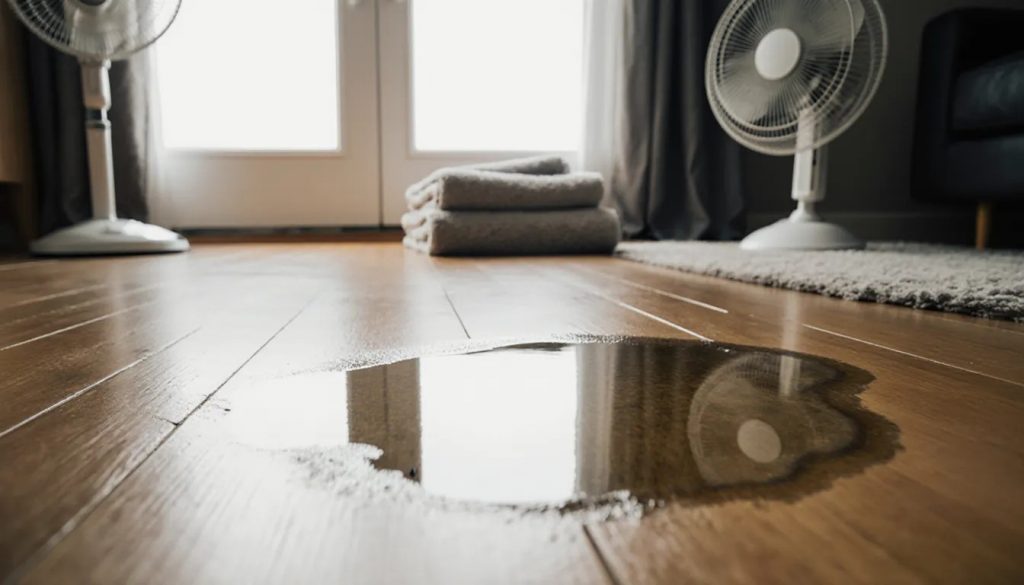
A pipe lets go behind a wall, a water heater splits, or a storm drives rain through a damaged roof, and suddenly you’re staring at soaked floors and a ticking clock. What you do in the first hours, and how you handle the insurance claim, often decides whether you’re reimbursed fairly or fighting a denial. The rules aren’t always intuitive, so here’s how water damage claims actually work.
This is a homeowner’s walkthrough, not legal or insurance advice. Your policy is the final word, so when something is unclear, call your agent and read your declarations page.
Quick Answer
Homeowners insurance generally covers water damage that is sudden and accidental, like a burst pipe or a storm-driven roof leak, but not gradual leaks, neglected maintenance, or flooding from outside (which needs a separate flood policy). To file a claim, stop the water source, document everything with photos and video, prevent further damage, then report the loss to your insurer promptly and keep a record of every call. Fast, well-documented claims are the ones that get paid.
What water damage does homeowners insurance cover?
The key test most insurers apply is whether the damage was sudden and accidental, something you couldn’t reasonably have seen coming. A pipe that bursts in a freeze, a washing-machine hose that lets go, a water heater that ruptures, or a roof that starts leaking after a hailstorm typically falls in the covered column. The damage was unexpected, and you acted on it right away.
What’s usually not covered
Coverage gets denied when the cause looks preventable or falls under a separate policy. A shower pan that leaked slowly for years, water seeping through foundation cracks, or damage traced to deferred maintenance is usually excluded as gradual. Two situations trip up homeowners constantly:
- Flooding from outside. Rising water from storms, overflowing rivers, or storm surge is generally not covered by a standard homeowners policy. That requires separate flood insurance, often through the National Flood Insurance Program.
- Sewer and drain backups. These are typically excluded unless you’ve added a specific endorsement to your policy.
Mold sits in a gray area: if it grew because of a sudden, covered event like a burst pipe, cleanup may be covered, though many policies cap how much they’ll pay for mold.
How to file a water damage claim, step by step
1. Stop the source
Shut off the water if you can, whether that’s a fixture valve or the main supply. Stopping the flow protects both your home and your claim, since insurers expect you to limit the damage.
2. Document everything before you clean up
Photograph and video the standing water, the source, and every damaged item, from soaked drywall and flooring to furniture and electronics. This evidence is the backbone of your claim, so capture it before you start hauling things out.
3. Mitigate further damage
Move undamaged belongings to a dry area, mop up standing water, and get air moving. Keep receipts for anything you buy to limit the damage, like a wet/dry vac or fans, because those costs are often reimbursable. Don’t make permanent repairs yet.
4. Report the loss promptly
Call your insurer as soon as you reasonably can. Be clear and brief about the cause and timing, for example: a burst pipe under the kitchen sink discovered this morning. Ask when an adjuster will visit, whether you must use preferred vendors, and what documentation they need.
5. Keep a paper trail
Write down your claim number and the name and time of every call. Save all receipts and keep damaged items, or photos of them, until the adjuster signs off.
6. Get independent repair estimates
Once the adjuster has assessed the loss, collect your own written estimates from licensed restoration pros so you can compare them against the insurer’s figure. For what restoration usually runs, see our guide on water damage restoration costs, and on the emergency basics, our walkthrough of what to do immediately after water damage.
Why water damage claims get denied
Most denials trace back to a handful of issues: damage ruled gradual or maintenance-related, failure to mitigate after the loss, thin documentation, or a cause that falls under an exclusion like flood or sewer backup. The two best defenses are acting fast and documenting thoroughly. The more clearly you can show the damage was sudden and that you moved quickly to contain it, the harder it is to deny.
Where you live changes the risk
In Florida and along the Gulf, the most damaging water often comes from the outside during hurricane season, which is exactly what a standard policy excludes, so flood insurance is the gap many homeowners don’t discover until it’s too late. In hail-prone parts of Texas, a storm-driven roof leak can be covered, but only if the roof damage is documented as sudden. In humid climates across the Southeast, slow leaks turn into mold faster, which makes early detection and prompt claims even more important. Wherever you are, knowing what your policy does and doesn’t cover before disaster strikes is half the battle.
A real-world example
Picture a supply line under the kitchen sink failing overnight. You wake to water across the floor and seeping toward the living room. The homeowner who shuts the valve, photographs everything, runs a wet/dry vac, and calls the insurer by breakfast is in a far stronger position than the one who waits a day to “see how bad it is.” Same leak, very different claim outcomes, decided mostly by speed and documentation.
Mistakes to avoid
- Cleaning up before documenting. Photos and video come first.
- Waiting to report. Delays give insurers a reason to question the claim.
- Assuming flooding is covered. Outside flooding needs a separate flood policy.
- Tossing damaged items before the adjuster has seen them.
- Hiring the first restoration crew that knocks. Verify them first, the same way you would any contractor.
Frequently asked questions
Does homeowners insurance cover water damage?
Usually, if the damage is sudden and accidental, such as a burst pipe or a storm-driven roof leak. Gradual leaks, neglected maintenance, and outside flooding are generally not covered, and flooding requires a separate flood insurance policy.
Is flooding covered by homeowners insurance?
No. Damage from outside flooding, including storm surge and overflowing waterways, is excluded from standard homeowners policies and requires separate flood insurance, often through the National Flood Insurance Program.
How soon should I file a water damage claim?
As soon as you reasonably can. Prompt reporting helps your insurer verify the cause and limits additional damage. Waiting can weaken or even jeopardize your claim.
Will filing a water damage claim raise my premium?
It can, depending on your insurer, claim history, and the size of the loss. For very small losses, some homeowners weigh the repair cost against their deductible before filing. Your agent can explain how a claim may affect your specific policy.
Does insurance cover mold from water damage?
Sometimes. If the mold resulted from a sudden, covered event like a burst pipe, cleanup may be covered, though many policies cap mold payouts. Mold from long-term, gradual moisture is typically excluded.
The bottom line
Water damage claims reward speed and documentation. Stop the source, photograph everything, prevent further damage, and report the loss promptly with a clear paper trail. Know before a crisis whether you carry flood and sewer-backup coverage, because those gaps are the ones that hurt most. And when it’s time to repair, vet your restoration company carefully, the same way you would any licensed and insured contractor.
Need a trusted restoration pro? Find local water damage restoration companies on Powered By The People and compare providers using real, aggregated reviews.